Korean Bibimbap
Highlighted under: Authentic Global Cuisine Favorites
Korean Bibimbap is a vibrant and flavorful dish that combines a variety of ingredients served over rice, topped with a fried egg and a spicy gochujang sauce.
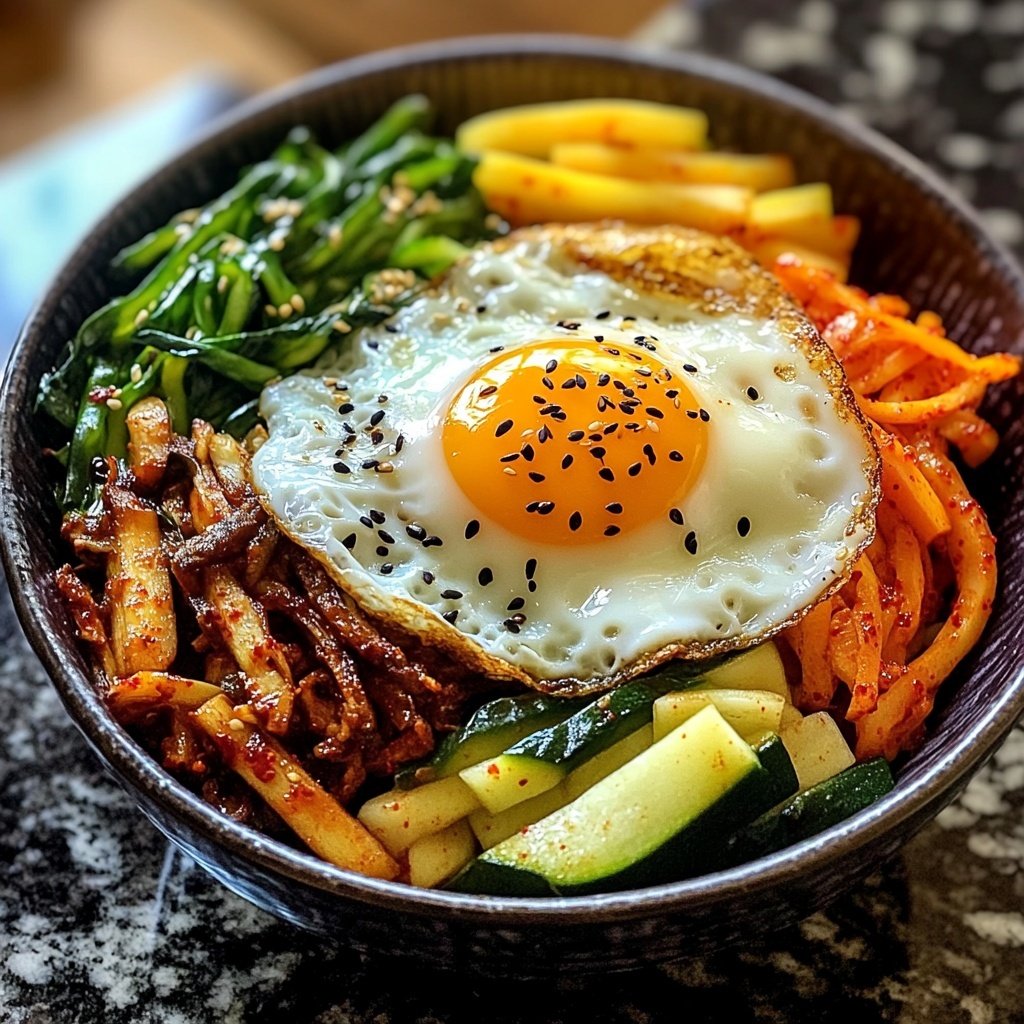
Bibimbap is a traditional Korean dish that translates to 'mixed rice'. It's a wonderful way to enjoy a variety of textures and flavors in one bowl, making it a favorite for many. Each bite is an explosion of taste, especially when you mix in the spicy gochujang sauce!
Why You'll Love This Recipe
- A colorful and nutritious meal packed with vegetables
- Customizable ingredients to suit your taste
- A delightful mix of textures and flavors in every bite
The Essence of Bibimbap
Bibimbap, which translates to 'mixed rice,' is a beloved Korean dish renowned for its colorful presentation and nutritious ingredients. Traditionally, it features a base of warm rice topped with a variety of sautéed and seasoned vegetables, protein options, and a fried egg. This dish not only delights the palate but also offers a visual feast, making it a popular choice for both home cooks and in restaurants.
At its core, bibimbap is a versatile meal that reflects the Korean philosophy of balance and harmony. Each ingredient contributes its unique flavor and texture, creating a delightful mix that is both satisfying and healthy. From the crunch of fresh vegetables to the richness of the egg, every bite offers a symphony of tastes that is both comforting and invigorating.
Customizing Your Bibimbap
One of the greatest joys of making bibimbap is the ability to customize it to your liking. While the classic version includes spinach, bean sprouts, and mushrooms, feel free to incorporate your favorite vegetables or proteins. Think bell peppers, kale, or even tofu for a plant-based twist. This adaptability makes bibimbap an excellent option for accommodating dietary preferences and seasonal produce.
Additionally, the level of spiciness can be adjusted based on personal preference. The gochujang sauce is key to elevating the dish, but you can control the heat by varying the amount used. For those who enjoy milder flavors, consider serving the sauce on the side, allowing each person to add as much or as little as they like.
Serving Suggestions
Serving bibimbap is all about presentation. For an authentic experience, opt for individual bowls and let each person assemble their dish at the table. This interactive element not only adds to the fun but also allows everyone to personalize their bibimbap according to their tastes, whether they prefer more vegetables, less rice, or a generous drizzle of gochujang.
Pair your bibimbap with traditional Korean side dishes, known as banchan, such as kimchi or pickled vegetables, to enhance the meal. A refreshing cucumber salad or a light soup can also complement the richness of the bibimbap, creating a well-rounded dining experience. Don't forget to have some extra sesame oil on hand for drizzling, as it adds an aromatic finish to this delightful dish.
Ingredients
For the Bibimbap
- 2 cups cooked rice
- 1 cup spinach, blanched
- 1 cup bean sprouts, blanched
- 1 carrot, julienned
- 1 zucchini, julienned
- 4 shiitake mushrooms, sliced
- 2 eggs
- 2 tablespoons sesame oil
- Salt, to taste
For the Gochujang Sauce
- 2 tablespoons gochujang (Korean red chili paste)
- 1 tablespoon sesame oil
- 1 teaspoon sugar
- 1 teaspoon vinegar
- 1 teaspoon water
Mix the ingredients together and enjoy your delicious Bibimbap!
Instructions
Prepare the Vegetables
In a skillet, heat 1 tablespoon of sesame oil over medium heat. Sauté the zucchini and mushrooms separately until tender and season with salt. Set aside.
Cook the Eggs
In the same skillet, fry the eggs sunny-side up, taking care not to break the yolk.
Make the Gochujang Sauce
In a small bowl, mix together gochujang, sesame oil, sugar, vinegar, and water until smooth.
Assemble the Bibimbap
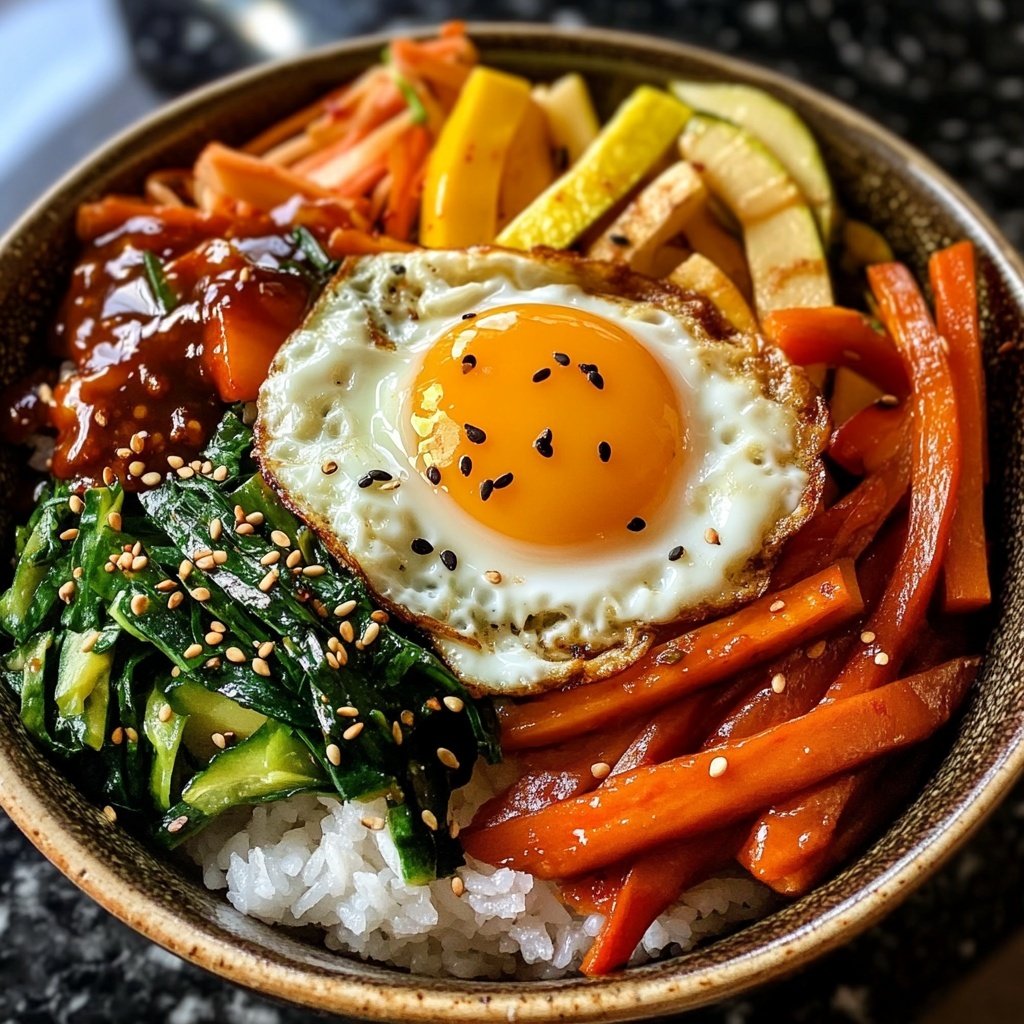
In a large bowl, place a portion of rice at the bottom. Arrange the sautéed vegetables, spinach, bean sprouts, and fried egg on top. Drizzle with gochujang sauce before serving.
Mix everything together before eating for a burst of flavor!
Pro Tips
- Feel free to add your favorite proteins such as beef, chicken, or tofu to make it more filling.
Storage and Reheating Tips
If you have leftovers of your bibimbap, store the components separately to maintain their freshness. Keep the rice, sautéed vegetables, and sauce in airtight containers in the refrigerator for up to three days. When you're ready to enjoy your bibimbap again, simply reheat the rice and vegetables in a skillet or microwave until warmed through.
For the best texture and flavor, avoid reheating the fried egg if possible. Instead, consider making a fresh egg to top your reheated bibimbap. This way, you’ll still get that wonderful runny yolk that adds richness to the dish.
Nutritional Benefits
Bibimbap is not only delicious but also packed with nutrients. The variety of vegetables provides essential vitamins, minerals, and antioxidants, while the rice offers a good source of carbohydrates for energy. Depending on your choice of protein, you can also boost the dish's protein content, making it a well-rounded meal.
Furthermore, incorporating ingredients like gochujang can have health benefits too. This Korean chili paste is known for its metabolism-boosting properties and can add depth to your dishes without excessive calories. Overall, bibimbap serves as a healthy and satisfying meal option that can fit into various dietary plans.
Questions About Recipes
→ Can I make Bibimbap vegetarian?
Absolutely! Just omit any meat and add more vegetables or tofu.
→ What can I substitute for gochujang?
You can use sriracha or a mix of red chili powder and miso paste as a substitute.
→ How do I store leftovers?
Store any leftovers in an airtight container in the fridge for up to 2 days.
→ Can I prepare the ingredients in advance?
Yes, you can prep the vegetables and sauce ahead of time to make assembly quicker.
Korean Bibimbap
Created by: Ottoline Reeves
Recipe Type: Authentic Global Cuisine Favorites
Skill Level: Intermediate
Final Quantity: 2 servings
What You'll Need
For the Bibimbap
- 2 cups cooked rice
- 1 cup spinach, blanched
- 1 cup bean sprouts, blanched
- 1 carrot, julienned
- 1 zucchini, julienned
- 4 shiitake mushrooms, sliced
- 2 eggs
- 2 tablespoons sesame oil
- Salt, to taste
For the Gochujang Sauce
- 2 tablespoons gochujang (Korean red chili paste)
- 1 tablespoon sesame oil
- 1 teaspoon sugar
- 1 teaspoon vinegar
- 1 teaspoon water
How-To Steps
In a skillet, heat 1 tablespoon of sesame oil over medium heat. Sauté the zucchini and mushrooms separately until tender and season with salt. Set aside.
In the same skillet, fry the eggs sunny-side up, taking care not to break the yolk.
In a small bowl, mix together gochujang, sesame oil, sugar, vinegar, and water until smooth.
In a large bowl, place a portion of rice at the bottom. Arrange the sautéed vegetables, spinach, bean sprouts, and fried egg on top. Drizzle with gochujang sauce before serving.
Extra Tips
- Feel free to add your favorite proteins such as beef, chicken, or tofu to make it more filling.
Nutritional Breakdown (Per Serving)
- Calories: 550 kcal
- Total Fat: 24g
- Saturated Fat: 5g
- Cholesterol: 186mg
- Sodium: 800mg
- Total Carbohydrates: 75g
- Dietary Fiber: 5g
- Sugars: 5g
- Protein: 14g